Gallstones
Gallstones
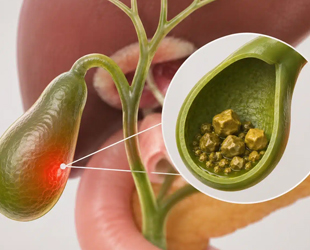
Gallstones are hardened deposits that form in the gallbladder, a small organ located beneath the liver. They can vary significantly in size, ranging from as small as a grain of sand to as large as a golf ball. A person may develop a single gallstone or multiple gallstones at the same time.
Many individuals with gallstones experience no symptoms and may not require treatment. However, when gallstones cause symptoms or lead to complications, medical or surgical intervention is typically necessary.
Dr. Jaydeep H. Palep provides expert evaluation and surgical management for patients with symptomatic gallstones, including laparoscopic cholecystectomy (removal of the gallbladder) using minimally invasive techniques.
Understanding Gallstones
What Are Gallstones?
Gallstones form when substances in bile — primarily cholesterol or bilirubin — become concentrated and crystallise into solid deposits within the gallbladder.
There are two main types of gallstones:
-
Cholesterol Gallstones: The most common type, formed primarily from undissolved cholesterol. They are typically yellow-green in colour.
-
Pigment Gallstones: Formed from excess bilirubin, a substance produced when red blood cells break down. They are smaller and darker than cholesterol gallstones.
Causes and Risk Factors
What Contributes to Gallstone Formation?
Gallstones may develop when there is an imbalance in the chemical composition of bile. Contributing factors and risk factors include:
-
Excess Cholesterol in Bile: If the liver secretes more cholesterol than bile can dissolve, the excess may crystallise and form stones.
-
Excess Bilirubin: Certain conditions, such as liver cirrhosis or haemolytic anaemia, can lead to excess bilirubin production, contributing to pigment stone formation.
-
Gallbladder Not Emptying Properly: If the gallbladder does not empty fully or regularly enough, bile may become highly concentrated and promote stone formation.
-
Obesity: Excess body weight is associated with higher cholesterol levels in bile, increasing the risk of gallstones.
-
Age: The risk of gallstones increases with age.
-
Female Sex: Women are at a higher risk of developing gallstones, particularly due to oestrogen's effect on cholesterol levels in bile.
-
Pregnancy: Hormonal changes during pregnancy can slow gallbladder emptying and increase cholesterol levels in bile.
-
Rapid Weight Loss: Losing weight quickly can cause the liver to secrete extra cholesterol into bile.
-
Diabetes: People with diabetes tend to have higher levels of triglycerides in the blood, which may increase gallstone risk.
-
Family History: A family history of gallstones can increase individual risk.
Symptoms of Gallstones
Recognising Gallstone Symptoms
Many people with gallstones have no symptoms — these are referred to as "silent" gallstones. When symptoms occur, they typically arise when a gallstone lodges in a duct and causes a blockage.
Common symptoms may include:
-
Biliary Colic: Sudden, intense pain in the upper right or centre of the abdomen, often occurring after a fatty meal. The pain may radiate to the right shoulder or back.
-
Nausea and Vomiting: May accompany episodes of biliary pain.
-
Indigestion and Bloating: Discomfort after eating, particularly with fatty or rich foods.
-
Fever and Chills: If a stone causes infection in the gallbladder or bile ducts, fever may develop.
-
Jaundice: Yellowing of the skin or whites of the eyes may occur if a gallstone obstructs the common bile duct.
Complications of Gallstones
When Gallstones Cause Serious Problems
If left untreated, symptomatic gallstones can lead to complications, including:
-
Acute Cholecystitis: Inflammation of the gallbladder, usually caused by a gallstone blocking the cystic duct.
-
Choledocholithiasis: Gallstones that migrate into the common bile duct, potentially causing obstruction, jaundice or infection.
-
Cholangitis: Infection of the bile ducts, which can be serious and may require urgent treatment.
-
Pancreatitis: A gallstone blocking the pancreatic duct can cause inflammation of the pancreas.
Treatment for Gallstones
Surgical and Non-Surgical Options
Observation (Watchful Waiting)
If gallstones are discovered incidentally and cause no symptoms, a period of observation may be appropriate. Regular monitoring may be recommended depending on individual risk factors.
Surgical Treatment: Cholecystectomy
For patients with symptomatic gallstones or complications, surgical removal of the gallbladder (cholecystectomy) is the most effective treatment. Removing the gallbladder eliminates the risk of further gallstone formation within it.
Laparoscopic cholecystectomy is the preferred surgical approach for most patients and involves removing the gallbladder through small incisions using a camera and surgical instruments. The body functions normally without the gallbladder, as bile from the liver flows directly into the small intestine.
Robotic-assisted cholecystectomy may be considered in selected patients, offering enhanced precision and three-dimensional visualisation during the procedure.
A consultation with Dr. Jaydeep H. Palep will provide a thorough assessment and allow for discussion of the most appropriate treatment approach based on individual medical history and clinical findings.