Hernia Surgery
Hernia Surgery
A hernia occurs when an internal organ or tissue pushes through a weak spot in the surrounding muscle or connective tissue. Hernias can develop in different areas of the abdomen, groin and chest, and may cause discomfort, pain or visible bulging.
While some hernias remain small and cause minimal symptoms, others may enlarge over time or lead to serious complications if not treated. Surgery is currently the only definitive treatment for a hernia.
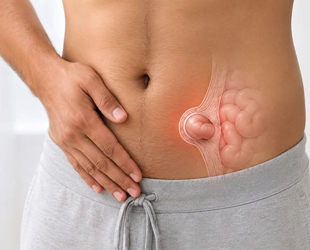
Dr. Jaydeep H. Palep specialises in laparoscopic and robotic-assisted hernia repair, offering minimally invasive surgical solutions tailored to each patient's specific hernia type, size and overall health condition.
Understanding Hernia Surgery
What Is Hernia Surgery?
Hernia surgery, or hernioplasty/herniorrhaphy, involves repairing the weakened tissue or muscle wall through which the hernia has protruded. The protruding tissue is returned to its correct position, and the weakened area is reinforced, often with a surgical mesh, to prevent recurrence.
The choice of surgical approach depends on the type of hernia, its size, location and the patient's overall health and medical history.
Types of Hernia Surgery
Surgical Approaches for Hernia Repair
1. Laparoscopic Hernia Repair
Laparoscopic hernia repair uses small incisions and a camera to guide the repair from inside the abdomen. A surgical mesh is placed to reinforce the weakened area and prevent recurrence.
This minimally invasive approach is associated with smaller incisions, less post-operative discomfort and a faster return to daily activities compared to open surgery in appropriate cases.
2. Robotic-Assisted Hernia Repair
Robotic-assisted hernia repair uses a robotic surgical platform to perform the procedure with enhanced precision and control. This approach provides three-dimensional visualisation and allows complex repairs to be performed with accurate instrument movement.
It may be particularly useful for complex or recurrent hernias, depending on clinical assessment.
3. Open Hernia Repair
Open hernia repair involves a direct incision over the hernia site. The protruding tissue is pushed back into place, and the muscle wall is repaired, typically with surgical mesh.
Open repair may be considered in certain hernia types or when other approaches are not suitable based on individual clinical evaluation.
Types of Hernias Treated
Common Hernia Types Managed Surgically
-
Inguinal Hernia: The most common type, occurring in the groin area when tissue pushes through the inguinal canal.
-
Umbilical Hernia: Occurs near the navel when abdominal tissue or fat pushes through the abdominal wall around the belly button.
-
Incisional Hernia: Develops at the site of a previous abdominal surgery incision, where the tissue may become weakened over time.
-
Hiatal Hernia: Occurs when part of the stomach pushes upward through the diaphragm into the chest cavity.
-
Femoral Hernia: Occurs when tissue pushes through the femoral canal in the upper thigh or groin.
-
Ventral Hernia: Refers to hernias that develop along the midline of the abdomen.
Benefits of Minimally Invasive Hernia Repair
Why Choose a Laparoscopic or Robotic Approach?
-
Smaller Incisions: Minimally invasive techniques require only small incisions compared to traditional open surgery.
-
Reduced Post-operative Discomfort: Patients may experience less pain in the recovery period.
-
Shorter Hospital Stay: Many patients are discharged within one to two days following laparoscopic or robotic hernia repair.
-
Quicker Return to Activity: Faster recovery allows patients to return to routine activities sooner.
-
Lower Risk of Wound Complications: Smaller incisions are associated with a reduced risk of wound-related complications.
Individual outcomes depend on the hernia type, size, complexity and the patient's overall health. A detailed consultation is necessary to determine the most appropriate approach.
Recovery After Hernia Surgery
What to Expect After Your Procedure
Recovery after laparoscopic hernia repair is generally faster than open surgery. Most patients are able to return to light activities within a few days and resume normal routines within two to four weeks, depending on the hernia type and the extent of the repair.
Patients are advised to avoid heavy lifting and strenuous physical activity during the initial recovery period, as recommended by their surgeon. Follow-up appointments are important to monitor healing and assess outcomes.