Hernia
Hernia
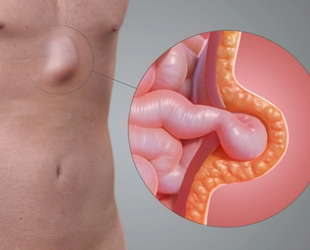
A hernia occurs when an internal organ, fatty tissue or part of the intestine pushes through a weak point or tear in the surrounding muscle or connective tissue wall. Hernias can develop in various regions of the body, most commonly in the abdomen, groin and upper thigh area.
While a hernia itself may not immediately cause serious problems, it does not resolve on its own and tends to enlarge over time. Complications can arise if the protruding tissue becomes trapped or its blood supply is restricted, which may require urgent surgical attention.
Dr. Jaydeep H. Palep provides comprehensive surgical management for various types of hernias, using advanced laparoscopic and robotic-assisted techniques to repair the defect and help prevent recurrence.
Understanding Hernia
What Is a Hernia?
A hernia forms when the contents of a body cavity bulge out of the area where they are normally contained. The most common type involves an organ or tissue pushing through a weakened area of the abdominal wall.
Hernias can be present from birth (congenital) or develop later in life due to factors such as increased abdominal pressure, physical strain, previous surgery or weakness in the abdominal wall that develops with age.
Types of Hernia
Common Hernia Types
-
Inguinal Hernia: The most common type, occurring in the groin when part of the intestine or fatty tissue pushes through the inguinal canal. It is more common in men.
-
Umbilical Hernia: Occurs near the navel when abdominal tissue or fatty tissue pushes through the abdominal wall. It can occur in both adults and children.
-
Femoral Hernia: Less common than inguinal hernia, this occurs in the upper thigh or groin area and is more common in women.
-
Incisional Hernia: Develops at the site of a previous abdominal surgery, where the incision site may become a point of weakness in the abdominal wall.
-
Hiatal Hernia: Occurs when part of the stomach pushes through the diaphragm into the chest cavity, often associated with acid reflux symptoms.
-
Ventral Hernia: A general term for hernias that occur along the midline of the abdomen.
-
Epigastric Hernia: Occurs in the area between the navel and the lower part of the sternum.
Causes and Risk Factors
What Contributes to Hernia Development?
Hernias develop when there is a combination of muscle weakness and strain. Contributing factors may include:
-
Congenital Weakness: Some individuals are born with a weakness in the abdominal wall.
-
Ageing: Muscles naturally weaken with age, increasing the risk of hernia.
-
Previous Abdominal Surgery: Surgical incisions can create areas of weakness in the abdominal wall.
-
Chronic Coughing: Persistent coughing increases intra-abdominal pressure, which can contribute to hernia formation.
-
Heavy Lifting: Repeated or sudden heavy lifting can strain the abdominal muscles.
-
Chronic Constipation: Straining during bowel movements increases abdominal pressure.
-
Obesity: Excess body weight places additional pressure on the abdominal wall.
-
Pregnancy: Increased abdominal pressure during pregnancy may contribute to hernia development.
Symptoms of a Hernia
Recognising Hernia Symptoms
The symptoms of a hernia depend on its type and location. Common signs and symptoms may include:
-
A visible or palpable bulge in the abdomen, groin or upper thigh area.
-
Discomfort or pain at the site of the bulge, which may worsen on bending, coughing or lifting.
-
A feeling of weakness or pressure in the affected area.
-
In some cases, the hernia may cause no symptoms and be discovered incidentally during a routine examination.
A hernia that becomes irreducible (cannot be pushed back in), painful or associated with nausea and vomiting may indicate a complication requiring urgent medical attention.
Treatment for Hernia
Surgical Repair Is the Only Definitive Treatment
Surgery is currently the only definitive treatment for a hernia. Non-surgical management such as wearing a supportive truss may provide temporary symptom relief but does not repair the hernia or prevent it from enlarging.
The timing of surgery depends on the size of the hernia, the severity of symptoms and the presence of complications. Elective surgical repair is generally recommended to prevent potential complications such as incarceration or strangulation.
Laparoscopic and robotic-assisted hernia repair techniques offer minimally invasive options for appropriate patients, aiming to reduce surgical trauma, post-operative discomfort and recovery time compared to traditional open surgery.
A consultation with Dr. Jaydeep H. Palep will allow for a thorough assessment of the hernia type, size and individual suitability for different surgical approaches.