Pancreatic & Spleen Surgery
Pancreatic & Spleen Surgery
The pancreas and spleen are vital abdominal organs that can be affected by a range of conditions requiring surgical intervention. Surgical procedures involving these organs require a high level of expertise due to their complex anatomy and proximity to major blood vessels and surrounding structures.
Advances in minimally invasive surgical techniques have made it possible to perform many pancreatic and splenic procedures laparoscopically or with robotic assistance, offering patients the potential benefits of smaller incisions and faster recovery.
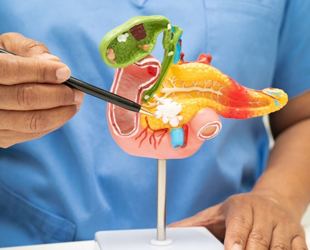
Dr. Jaydeep H. Palep offers specialised surgical management of pancreatic and splenic conditions, with expertise in laparoscopic and robotic-assisted procedures tailored to each patient's diagnosis and clinical requirements.
Pancreatic Surgery
Surgical Management of Pancreatic Conditions
The pancreas is a glandular organ that plays a role in both digestion and blood sugar regulation. Conditions affecting the pancreas may require surgical intervention depending on their nature, severity and response to other treatments.
Types of Pancreatic Surgery (Robotic / Laparoscopic)
1. Distal Pancreatectomy
Distal pancreatectomy involves the removal of the body and tail of the pancreas. It may be performed for conditions such as tumours or cysts located in the distal portion of the pancreas.
This procedure can often be performed laparoscopically or with robotic assistance in suitable patients.
2. Pancreatic Cyst Removal
Pancreatic cysts are fluid-filled sacs that can develop within or on the surface of the pancreas. Surgical removal may be recommended depending on the type, size and characteristics of the cyst, as well as associated symptoms.
3. Surgery for Chronic Pancreatitis
In selected patients with chronic pancreatitis, surgical intervention may be considered to relieve pain, address complications or improve drainage of the pancreatic duct.
Conditions Treated
-
Pancreatic Cysts and Tumours: Benign and selected surgical conditions of the pancreas requiring operative management.
-
Chronic Pancreatitis Complications: Surgical intervention for pain or structural complications in appropriate cases.
-
Insulinoma: A rare tumour of the pancreas that produces excess insulin, managed surgically in suitable patients.
Spleen Surgery
Surgical Management of Splenic Conditions
The spleen is an organ located in the upper left abdomen that plays a role in immune function and blood filtration. Conditions affecting the spleen may require surgical intervention, including partial or complete removal.
Types of Spleen Surgery
1. Robotic-Assisted Splenectomy
Robotic-assisted splenectomy uses a robotic surgical system for enhanced precision and visualisation during spleen removal. This approach may be considered in selected patients based on clinical assessment.
2. Laparoscopic Splenectomy
Laparoscopic splenectomy is the removal of the spleen using minimally invasive techniques. It is performed through small incisions with a camera and surgical instruments, and is associated with faster recovery compared to open surgery in appropriate cases.
Conditions Treated
-
Idiopathic Thrombocytopenic Purpura (ITP): A blood disorder where the spleen destroys platelets; splenectomy may be considered when other treatments have not been effective.
-
Splenic Cysts: Fluid-filled sacs within the spleen requiring surgical management in selected cases.
-
Splenic Tumours: Benign or selected splenic masses requiring operative treatment.
-
Hereditary Haematological Conditions: Certain blood disorders may require splenectomy as part of the management plan.
-
Splenic Trauma: Severe injury to the spleen may require surgical intervention in appropriate cases.
Benefits of Minimally Invasive Pancreatic & Spleen Surgery
-
Smaller Incisions: Laparoscopic and robotic approaches require only small incisions, reducing surgical trauma.
-
Shorter Hospital Stay: Minimally invasive procedures are generally associated with a shorter hospital admission.
-
Faster Recovery: Patients may return to normal activities sooner compared to open surgery.
-
Reduced Blood Loss: Minimally invasive techniques can be associated with less intraoperative blood loss in suitable cases.
Outcomes vary based on the underlying condition, procedure complexity and individual patient factors. A detailed clinical evaluation is necessary to determine the most appropriate treatment approach.
Recovery After Pancreatic & Spleen Surgery
Post-Operative Care and Follow-Up
Recovery timelines depend on the type of procedure performed and the patient's overall health. Laparoscopic and robotic-assisted procedures are generally associated with faster recovery than open surgery.
Following splenectomy, patients may require vaccinations to reduce the risk of certain infections, as the spleen plays a role in immune function. Long-term follow-up with the treating team is important to monitor health and manage any ongoing requirements.